
Maximizing Throughput with 10GigE Machine Vision Cameras
페이지 정보

본문
Manufacturing lines that depend on high-resolution inspection frequently hit a wall long before the mechanical conveyor ever slows down. The bottleneck is data: a camera can capture a sharp 20-megapixel frame in a fraction of a second, but if the interface cannot move that data to the processor fast enough, the line has to wait. This mismatch between sensor capability and transport bandwidth is one of the most common reasons throughput targets fail during system commissioning, and it becomes more acute as inspection resolution and line speed both increase simultaneously.
10GigE machine vision cameras address this problem directly by offering roughly ten times the sustained bandwidth of standard GigE Vision cameras, while retaining the cabling simplicity and long-distance reach that Ethernet-based systems are known for. For engineers designing or retrofitting inspection cells, this interface class turns a previously theoretical frame rate into a practically achievable one. The rest of this article examines how 10GigE hardware removes bandwidth constraints, what design tradeoffs come with adopting it, and how to evaluate whether your current or planned machine vision systems actually need this level of throughput. ClearView Imaging Ltd
Why Does Camera Interface Bandwidth Limit Inspection Speed?
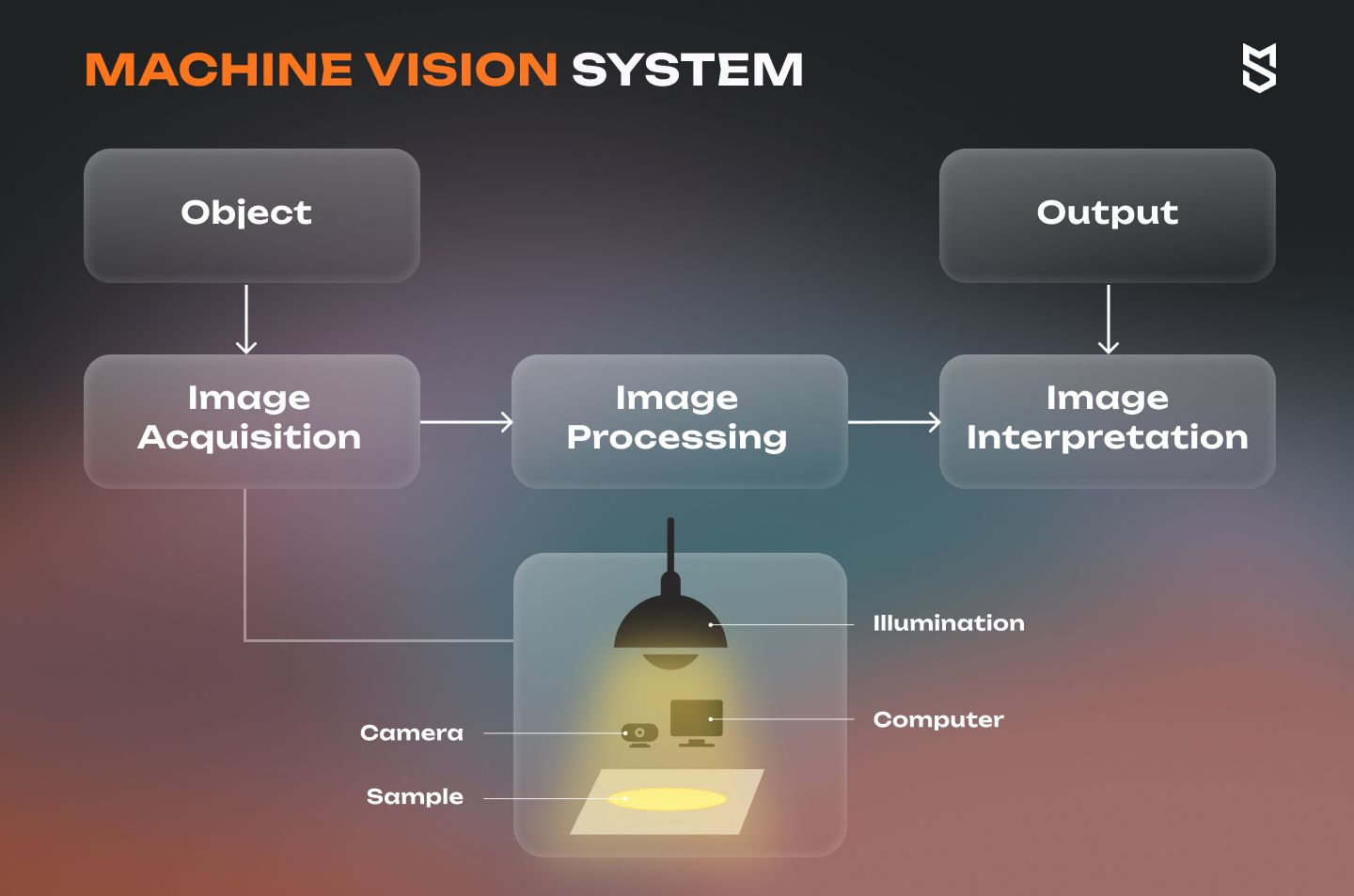
Every machine vision camera has a maximum data rate determined by its sensor resolution, bit depth, and desired frame rate, and that data has to travel across a physical interface to reach the frame grabber or host PC. A standard GigE Vision connection tops out near 1000 megabits per second of usable throughput, which sounds substantial until you calculate real-world sensor output. A 12-megapixel monochrome sensor at 8-bit depth running at 30 frames per second generates roughly 2.9 gigabits per second of raw pixel data - nearly three times what a single GigE link can carry without compression or frame rate reduction.
This is precisely the ceiling that pushes integrators toward multi-camera GigE arrays, USB3 Vision, Camera Link, or 10GigE alternatives. Multi-camera GigE setups work, but they multiply cabling, switch ports, and points of failure across the cell. Camera Link delivers strong bandwidth but sacrifices cable length and the flexibility of standard networking infrastructure. 10GigE occupies a practical middle ground: a single cable, standard RJ45 or SFP+ connector, and enough throughput to run a high-resolution sensor at full frame rate without artificial compromise.
How Much Bandwidth Does a 10GigE Link Actually Deliver?
A 10GigE interface provides approximately 10,000 megabits per second of theoretical bandwidth, and in well-engineered industrial machine vision cameras, sustained throughput typically reaches 9,000 to 9,500 Mbps after protocol overhead. Returning to the earlier example, that same 12-megapixel sensor running at 8-bit depth and 30 frames per second, requiring 2.9 Gbps, now consumes less than a third of the available link capacity. This headroom matters because it allows the same cable and switch infrastructure to support higher resolutions, faster frame rates, or additional camera streams without redesigning the network.
Consider a practical scenario: a system integrator needs to inspect printed circuit boards at 45 frames per second using a 20-megapixel color sensor at 10-bit depth. Raw throughput demand comes out near 8.1 Gbps - a figure that would be impossible on GigE without dropping resolution or frame rate, but sits comfortably within a single 10GigE link with margin to spare. That margin is not wasted; it absorbs protocol overhead, occasional retransmissions, and future upgrades to higher-resolution sensors without forcing a full network redesign.
What Role Does Cable Length Play in System Design?
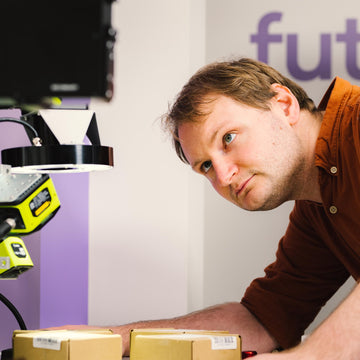
One advantage that often gets overlooked in bandwidth discussions is reach. Copper-based 10GigE connections using Cat6a or Cat7 cabling reliably support distances up to 100 meters, and fiber-based SFP+ links extend that considerably further, into the kilometer range depending on the optical module. Compare this to Camera Link, which is typically limited to around 10 meters without repeaters, or USB3 Vision, which struggles reliably beyond 5 to 8 meters without active extension hardware. ClearView Imaging UK
For factory floors where cameras are mounted on gantries, robotic arms, or overhead rails far from the control cabinet, this reach is not a convenience - it is often the deciding factor in whether a design is feasible at all. Running a single Cat6a cable from a camera on a 40-meter conveyor line back to a centralized processing rack, without repeaters or media converters, simplifies both installation and long-term maintenance considerably.

What Should Integrators Check Before Specifying 10GigE Hardware?
Adopting a faster interface only pays off if every other component in the chain can keep pace. A camera capable of saturating a 10GigE link is only useful if the network switch, cabling, and host PC network interface card are all rated for equivalent throughput; mismatched components simply move the bottleneck rather than eliminating it. Engineers should also verify that the host system's storage or processing pipeline can absorb the incoming data rate, since a fast camera feeding a slow disk array or an underpowered GPU still ends up frame-starved during inspection cycles.
It helps to think through the following checklist during specification and procurement:
- Network interface card: confirm the host PC uses a 10GigE-rated NIC, ideally with a dedicated PCIe lane rather than a shared chipset connection, to avoid CPU-side throughput throttling.
- Switch capability: managed switches with 10GigE ports and jumbo frame support reduce per-packet overhead, which matters at sustained high frame rates.
- Cabling grade: Cat6a is the practical minimum for reliable 10GigE copper runs; Cat5e or standard Cat6 will not sustain the link reliably at longer distances.
- Software SDK compatibility: the camera's GenICam-compliant driver stack must be validated against the imaging software or machine vision systems already deployed on the line.
- Power and environmental rating: industrial machine vision cameras destined for wash-down or high-vibration environments need IP67 housings and locking connectors, not commercial-grade enclosures.
Skipping any one of these checks tends to surface as an intermittent, hard-to-diagnose fault months after installation rather than an obvious failure during commissioning - dropped frames under thermal load, or link resets when a nearby motor drive introduces electrical noise onto an unshielded cable run.
Is 10GigE Overkill for Smaller Inspection Systems?
Not every application needs this much bandwidth, and it would be misleading to suggest otherwise. A single-camera system inspecting low-resolution parts at modest line speeds - say, a 2-megapixel sensor running at 15 frames per second for basic presence-or-absence checks - will rarely approach GigE's ceiling, let alone need ten times that capacity. In these cases, 10GigE hardware adds cost without a corresponding throughput benefit, and engineers should size the interface to the application rather than defaulting to the fastest available option. ClearView Imaging
The calculation changes once you introduce multiple synchronized cameras, higher sensor resolutions, color imaging with higher bit depth, or line speeds that leave little margin for buffering. A robotic guidance application using three 5-megapixel cameras simultaneously for stereo triangulation, each running at 60 frames per second, can easily exceed what a single GigE link - or even several bonded GigE links - can handle cleanly. In that scenario, 10GigE stops being a luxury and becomes the only architecture that avoids frame drops or forced downsampling. The decision, in other words, mirrors choosing a highway over a side street: both get you there, but only one scales gracefully as traffic increases.
How Does 10GigE Affect Multi-Camera Synchronization?
Throughput is only part of the story when a system uses several cameras that must trigger and stream in lockstep, such as in 3D reconstruction or multi-angle defect detection. Because a single 10GigE switch can host multiple cameras without saturating the link, precision time protocol (PTP) synchronization - standardized under IEEE 1588 - becomes far easier to implement consistently across the group. Cameras sharing a single high-bandwidth switch experience more predictable latency than those competing across several lower-bandwidth GigE segments, which reduces the timing jitter that can otherwise misalign frames captured from different viewpoints.

This matters in practice: a 0.5-millisecond synchronization error between two cameras observing a fast-moving part on a 2 meters-per-second conveyor translates to a 1-millimeter positional discrepancy between frames, which can be enough to throw off dimensional measurement or robotic pick-and-place coordinates. Reliable, low-jitter synchronization is one of the less-advertised but genuinely valuable byproducts of moving to a higher-bandwidth, better-engineered network backbone. Vision software resources on PTP configuration are worth reviewing before final commissioning to confirm switch-level support for hardware timestamping.
What Does Migration from GigE to 10GigE Actually Involve?
Migrating an existing line is rarely a simple camera swap. Beyond replacing the camera itself, the switch infrastructure, host NIC, and often the cabling all need to be upgraded in parallel, since a 10GigE camera bottlenecked by a GigE switch delivers no real benefit over the equipment it replaced. Integrators should budget for a full audit of the existing network path, not just the imaging endpoint, before committing to new hardware.
Software compatibility deserves equal attention. Most reputable camera vendors supply GenICam-compliant GenTL producers, which allow existing acquisition software to recognize a 10GigE camera with minimal reconfiguration, but frame buffer sizes, region-of-interest settings, and trigger timing parameters often need retuning to take advantage of the new bandwidth ceiling rather than simply replicating old settings on faster hardware. Teams that treat migration purely as a hardware swap, without revisiting these software parameters, frequently leave a substantial portion of the available performance unused.
How Do You Choose Among the Best Machine Vision Cameras for a 10GigE Upgrade?
Frequently Asked Questions
Does upgrading to 10GigE require replacing every camera on a production line at once?
No. Most 10GigE switches support mixed environments, so you can migrate high-bandwidth stations first while leaving lower-throughput GigE cameras on separate switch ports. A phased rollout is common and reduces both downtime and upfront cost.
Can existing Cat6 cabling be reused for a 10GigE camera installation?
Standard Cat6 can work at short distances, typically under 55 meters, but reliability drops as run length increases due to crosstalk. Cat6a is strongly recommended for any run approaching 100 meters or in electrically noisy plant environments.
How much more does a 10GigE camera cost compared to a GigE model?
Pricing varies by vendor and resolution, but 10GigE models generally carry a premium reflecting the interface chipset and often larger onboard buffer memory. The added cost is usually justified only when sensor resolution or frame rate genuinely exceeds GigE's practical bandwidth limits.
Will jumbo frames improve performance, and are they mandatory?
Jumbo frames reduce per-packet overhead and are recommended for sustained high-throughput streaming, though not strictly mandatory. Enabling them requires consistent configuration across the camera, switch, and host NIC, since a mismatch anywhere in that chain will cause dropped packets.
What happens if the host PC's storage can't keep up with a 10GigE camera's data rate?
The camera will still capture at full speed, but frames will queue in buffer memory and eventually drop if storage or processing can't consume data fast enough. Solid-state RAID arrays or sufficient RAM-based buffering are typically needed to match sustained 10GigE throughput for long inspection runs.
- 이전글G Dragon Glasses: I Got Ripped Off by One Seller, Then Tried the brand—It Was Night and Day 26.07.14
- 다음글A4 Paper Special Tools To Ease Your Everyday Lifethe Only A4 Paper Special Trick That Every Person Must Learn 26.07.14
댓글목록
등록된 댓글이 없습니다.